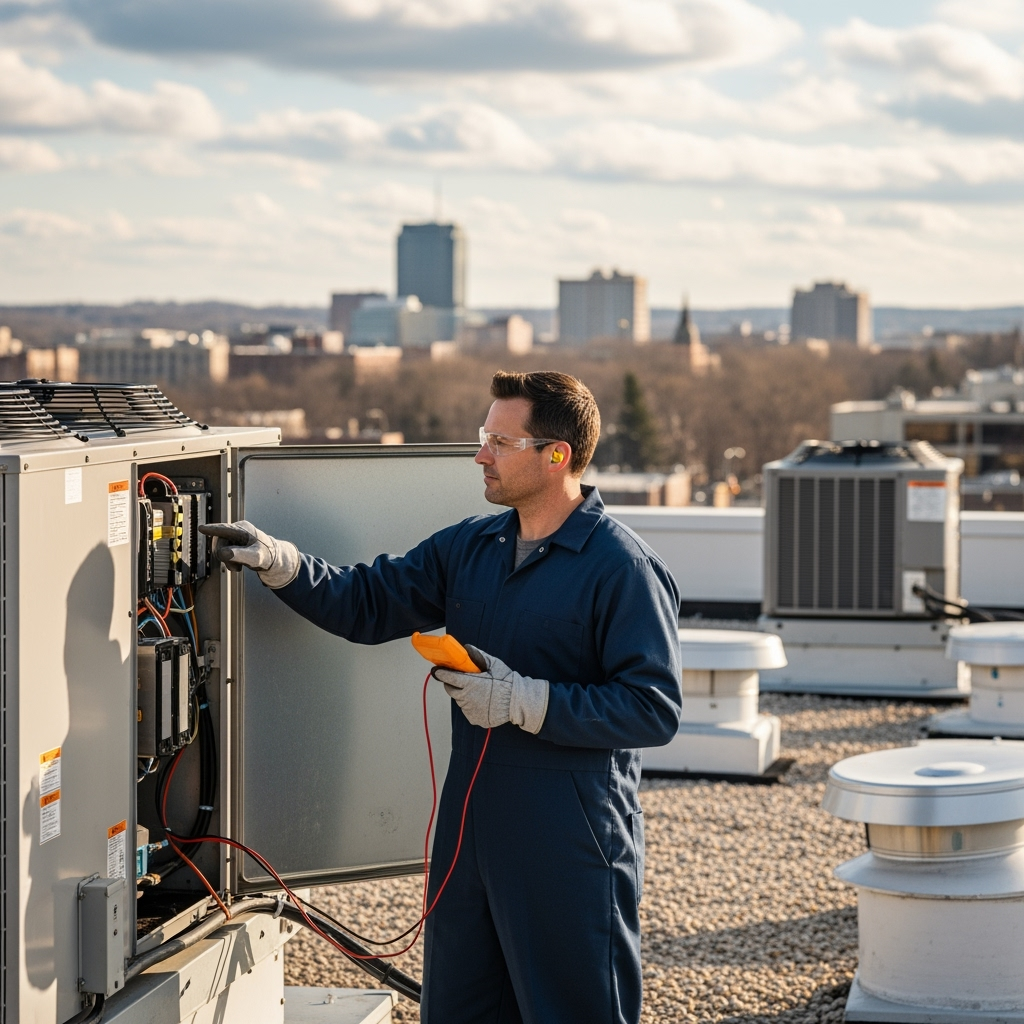
Keeping business spaces comfortable and productive starts with reliable commercial air conditioning maintenance in Wisconsin, and that’s exactly what I’ll walk you through in this guide. If you manage a facility in Sun Prairie or the surrounding areas, understanding local demands and available resources can save you money, reduce downtime, and extend equipment life—a reality backed by state energy and environmental programs at Wisconsin’s state site, which highlights incentives and efficiency initiatives that matter for businesses.
Why proactive maintenance matters for commercial AC
I’ve seen too many small problems become expensive emergencies. In Wisconsin’s mixed climate—humid summers and cold winters—commercial HVAC systems face wide temperature swings, heavy seasonal load changes, and periods of rapid cycling. Regular maintenance reduces the risk of mid-summer breakdowns, keeps indoor air quality consistent for tenants and employees, and lowers energy bills by ensuring systems run at peak efficiency.
Beyond comfort, preventive care helps buildings meet regulatory or corporate sustainability goals and avoid expensive emergency repairs that can disrupt operations for days. For multi-tenant properties, downtime also means tenant complaints and potential revenue loss. Maintaining equipment is simply good business planning.
How local climate and building types change the maintenance approach
Buildings in Sun Prairie and nearby neighborhoods vary from strip malls and restaurants to medical facilities and light industrial spaces. Each type has different ventilation, refrigeration, and usage patterns. For example, restaurants face grease and humidity that can foul coils faster, while office buildings often require more attention to filtration and zoning controls to keep large open-plan spaces comfortable.
Seasonal weather swings in this area mean systems move between heating and cooling modes frequently. That makes spring and fall tune-ups particularly important so equipment is ready for peak summer and winter performance. Addressing small seasonal issues early prevents them from becoming major problems during the busiest times of year.
What a strong commercial AC maintenance plan includes
A thoughtful maintenance plan is predictable, measurable, and tailored to your system and building use. Here’s what I recommend including in every commercial AC program I help design:
- Planned seasonal inspections before summer and winter peaks to check refrigerant levels, electrical connections, and controls.
- Cleaning and replacing filters and coil cleaning on a regular schedule to maintain airflow and efficiency.
- Verification of thermostats, sensors, and building automation controls to ensure accurate operation and zoning performance.
- Documentation of inspections, repairs, and parts replaced so you have a clear service history and warranty support.
Seasonal checklist for commercial systems
Use this short checklist as a baseline for each seasonal visit. These items catch common failure points before they become emergencies and are easy to schedule with a trusted contractor.
- Inspect and clean condenser and evaporator coils; remove debris from rooftop units and outdoor condensers.
- Check refrigerant charge and look for leaks; verify compressor and fan operation under load.
- Test electrical components and tighten connections; replace worn contactors and capacitors before they fail.
- Assess airflow and ductwork for obstructions; replace filters and verify ventilation rates.
Actionable steps to reduce downtime and cut energy use
There are simple, low-cost actions that deliver immediate improvements to reliability and efficiency. I recommend implementing these steps right away if you manage a commercial property:
First, schedule quarterly visual inspections of rooftop units and mechanical rooms to catch debris, water intrusion, or pest issues early. Second, adopt a filter replacement schedule based on occupancy and usage rather than calendar months alone; heavily used spaces need more frequent changes. Third, program thermostats with smart setbacks and zone control to avoid conditioning empty spaces and reduce run-time. Finally, keep a small inventory of high-failure parts like starters, contactors, and belts so repairs are faster when a unit goes down.
Trends shaping commercial HVAC for 2025 and beyond
The HVAC world is changing fast, and three major trends are worth watching for anyone responsible for building comfort in this area.
1. Electrification and heat pump adoption
Many commercial properties are moving toward electrified heating solutions, especially heat pumps, to reduce carbon footprints and leverage utility incentives. Heat pumps now come in commercial models capable of heating large open areas and can be paired with existing ductwork or installed as VRF systems for better zoning control.
2. Smart controls and remote monitoring
IoT-enabled thermostats and remote monitoring systems allow facilities teams and contractors to spot performance drift, detect refrigerant leaks, and respond to alarms before occupants notice. For buildings in this area with multiple sites, a centralized dashboard saves time and prevents small issues from becoming big ones.
3. Incentives and efficiency programs
Local and state programs increasingly offer rebates and technical assistance for energy-efficient equipment upgrades. Tying maintenance and planned upgrades to available incentives helps lower upfront costs and improves payback for new systems.
How to choose the right HVAC contractor for your commercial property
Picking the right contractor isn’t just about price. I recommend evaluating three things: technical capability, local experience, and documented service processes. Here’s what to look for when vetting companies.
Questions to ask potential contractors
Ask about references for similar building types in the area, emergency response times, warranty and parts policies, and whether they provide digital maintenance logs and remote monitoring options. A reliable contractor will also provide a clear scope for preventive maintenance and a transparent pricing model for both scheduled work and emergency calls.
Costs, savings, and calculating return on maintenance
Regular maintenance has a clear cost-benefit profile. Well-maintained commercial cooling systems typically use less energy, have fewer emergency repairs, and last several years longer than neglected systems. While exact numbers vary by building size and usage, the main drivers of return on investment are reduced energy consumption, avoided emergency repair costs, and deferred capital replacement.
When you evaluate vendor proposals, compare projected energy savings, the cost of planned maintenance visits, and the expected life extension of major components. Don’t forget to factor in non-monetary benefits like improved tenant comfort and fewer complaints, which indirectly support occupancy and revenue.
Common pain points and how to solve them
From the field, I see the same challenges arise across many sites in this region. Below are common pain points and how I recommend addressing them:
- Unexpected summer shutdowns: Prevent with a spring full-system inspection and a checklist of critical parts to replace proactively.
- High utility bills: Start with airflow and filter audits, followed by control optimization and economizer tuning for rooftop units.
- Poor indoor air quality: Increase filtration quality where feasible, inspect and clean coils and drip pans, and verify ventilation rates match occupancy.
- Slow response to emergencies: Establish an emergency agreement with local technicians that includes guaranteed response windows and on-site spare parts.
Emergency steps for building managers when a system fails
Even with the best maintenance plan, things happen. When a commercial AC unit fails during operation, quick, organized action reduces business impact. Follow these steps immediately:
- Isolate the affected zone and adjust nearby thermostats to stabilize occupant comfort where possible.
- Switch to backup systems or portable cooling as a temporary remedy while the service team is en route.
- Notify tenants or staff with an estimated timeline for repair and steps being taken to maintain comfort and safety.
- Document the failure and timeline for the contractor to support warranty claims and future prevention plans.
Local considerations for Sun Prairie and nearby communities
In Sun Prairie and the broader Dane County area, building owners should plan around seasonal demand peaks and available contractor capacity. Scheduling preventive work during spring and early fall helps avoid the busiest times for service calls. Also, consider coordinating maintenance across multiple properties in the city to gain scheduling priority from service providers and possibly volume pricing.
Energy programs at the state level often have timing windows for incentives; coordinating your maintenance or retrofit projects with these programs can improve project economics. Local utility or state-run efficiency programs sometimes offer audits or rebates that pair well with a maintenance-first approach, making upgrades more affordable and sensible.
Wrapping up: a practical path forward
If you manage a commercial property in Sun Prairie or elsewhere in Wisconsin, start with a straightforward plan: schedule seasonal inspections, prioritize airflow and control accuracy, and work with a contractor who documents everything and responds quickly. Those steps minimize surprises, protect occupant comfort, and keep your equipment working efficiently.
If you’re ready to move from reactive repairs to a predictable maintenance program or want help evaluating upgrade options tied to local incentives, contact Nextech for a consultation. Nextech can assess your current systems, recommend a maintenance cadence, and outline energy-saving upgrades tailored to Sun Prairie facilities.